






















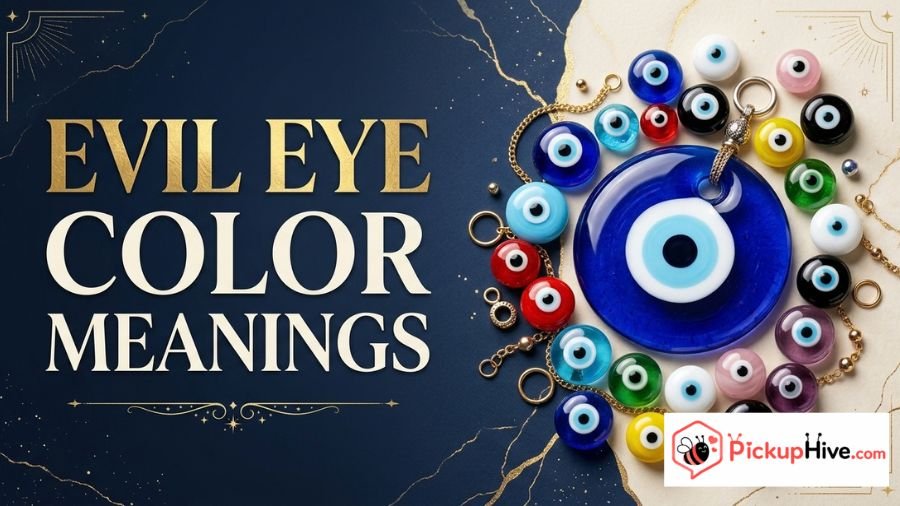
Evil Eye Color Meanings? Symbolism, Protection, and Modern Uses (2026 Guide)
Have you ever noticed a blue glass eye hanging near someone’s front door, a tiny evil eye charm on a bracelet, or a colorful pendant worn by a friend? You may have wondered what those colors mean and why people wear them. That’s where understanding evil eye color meanings becomes useful.
The evil eye is an ancient symbol found in several cultures. It’s commonly associated with protection against envy, harmful intentions, and unwanted attention. Today, people wear evil eye jewelry, decorate their homes with eye-shaped charms, and share the symbol on social media. Some appreciate its cultural history, while others simply love its striking appearance.
Color adds another layer of meaning. Blue is widely associated with protection, while red can represent courage and strength. Green is often linked to growth and good fortune, and black may symbolize resilience or protection from negativity. However, these interpretations aren’t universal. Traditions vary, and modern jewelry makers sometimes assign their own meanings to each shade.
Interest in spiritual jewelry, cultural symbols, and personalized accessories has also made these meanings more visible online. People want to know which color suits their intentions, whether a charm makes a thoughtful gift, and how to wear one respectfully.
This guide explores the symbolism behind each popular shade, the traditions associated with the evil eye, and practical ways to choose a color that feels meaningful to you.
Quick Answer: What Do Evil Eye Colors Mean?
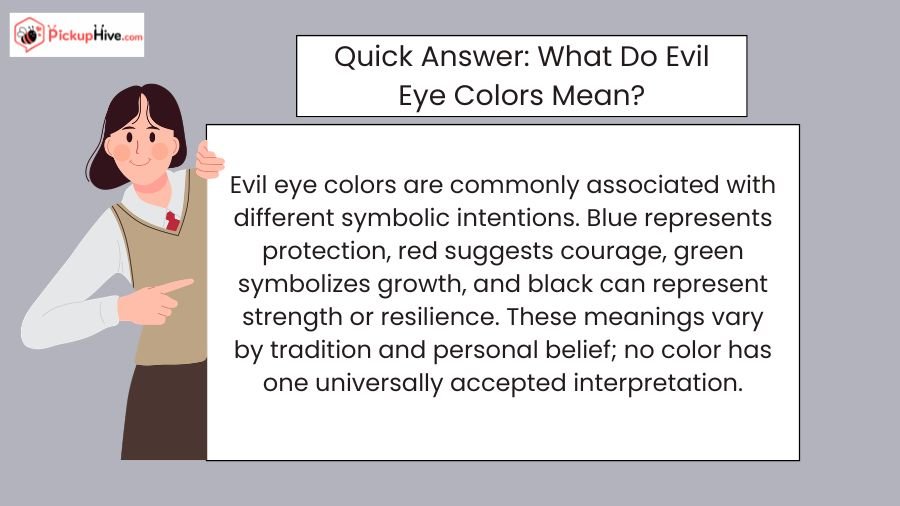
Evil eye colors are commonly associated with different symbolic intentions. Blue represents protection, red suggests courage, green symbolizes growth, and black can represent strength or resilience. These meanings vary by tradition and personal belief; no color has one universally accepted interpretation.
For example:
- A: “Why do you wear a blue evil eye?” B: “It reminds me to feel protected.”
- A: “What does your green charm mean?” B: “Growth, balance, and good fortune.”
Detailed Meaning Breakdown
Primary Meaning
The evil eye is a symbol traditionally connected to the belief that envy or an intense, harmful gaze can bring misfortune. In response to this concern, people in different societies developed protective customs, including wearing amulets shaped like an eye.
The symbol is especially associated with Mediterranean, Middle Eastern, and West Asian traditions. It appears in jewelry, household decorations, beads, and other objects intended to offer symbolic protection.
Color influences the modern interpretation of the charm. A blue bead may communicate protection, while a red one may represent strength or confidence. These associations give people a personal way to express what they value.
It’s worth remembering that the evil eye symbol and its color meanings aren’t identical across every culture. Some traditions emphasize the protective object itself, while contemporary interpretations place more attention on individual colors.
Secondary Meanings
Beyond protection, people often connect evil eye colors with emotions, aspirations, and personal goals. A green charm might remind someone of a fresh start, while a yellow charm could represent optimism.
These additional meanings make the symbol flexible. One person may wear an amulet because of family tradition, another may choose it as a reminder to stay confident, and someone else may simply enjoy its design.
In modern spiritual jewelry, the color can serve as a personal intention rather than a fixed cultural rule. That distinction matters because commercial descriptions sometimes present newer interpretations as if every community has followed them for centuries.
Rare or Misinterpreted Meanings
A common misconception is that every evil eye color has one official definition. There is no single global color chart that all cultures follow.
Another misunderstanding is that a darker color automatically represents something dangerous. Black, for example, may be interpreted as strength, grounding, or protection in modern jewelry traditions. It doesn’t necessarily indicate bad luck.
Likewise, a charm’s color alone doesn’t establish someone’s religion, cultural background, or spiritual beliefs. A person may wear it for aesthetic reasons without subscribing to any supernatural explanation.
The most useful approach is to treat color meanings as cultural associations and personal symbolism, not as universal facts or guaranteed outcomes.
What Evil Eye Colors Mean in Different Contexts
In Jewelry and Everyday Wear
Jewelry is one of the most common ways people use the evil eye symbol. Bracelets, necklaces, rings, earrings, and anklets can feature a single eye or several colorful beads.
A traditional-looking blue bead may be chosen for its familiar protective symbolism. A red pendant can feel bold and expressive, while a white charm may appeal to someone who associates it with peace and clarity.
I often find that the appeal of these pieces comes from their combination of beauty and meaning. A small charm can become a personal reminder without requiring the wearer to explain every detail.
When choosing jewelry, consider the intended symbolism, the design, and the cultural tradition behind it. You don’t have to follow a rigid color system to select something meaningful.
On Social Media Platforms
Evil eye jewelry frequently appears in outfit photos, gift guides, home décor posts, and discussions about spiritual accessories. On Instagram, a creator might show a blue bracelet alongside a caption about protection or personal boundaries.
TikTok videos may explore different color associations, compare charms, or explain the history of the symbol. Pinterest-style inspiration can focus on coordinating beads with clothing or interior design.
The meaning depends on context. A creator discussing cultural history may be describing a traditional belief, whereas a fashion account may be using the eye as a decorative motif.
Before treating a social media explanation as an established tradition, check whether it distinguishes cultural history from modern spiritual interpretations.
In Dating and Relationships
An evil eye bracelet can make a thoughtful gift when the recipient appreciates its symbolism. Some people associate it with wishing a loved one well, offering encouragement, or expressing care.
For instance, someone might give a blue charm to a partner who is starting a new job, hoping it serves as a reminder of support. A pink charm could be selected to represent affection in a contemporary color-symbolism system.
Still, the gift doesn’t automatically communicate romantic love. Its message depends on the relationship, the giver’s explanation, and the recipient’s own beliefs.
If you’re unsure, include a simple note explaining why you chose that particular color. Personal context often makes a symbolic gift more meaningful than the object alone.
In Professional Communication
The evil eye is not a standard workplace symbol, so its meaning can be unclear in professional settings. A colleague might wear one as jewelry, display one on a desk, or give a charm as a personal gift.
There’s generally no issue with wearing an accessory respectfully, provided it follows workplace dress policies. Problems are more likely when someone makes assumptions about a coworker’s religion, culture, or beliefs based on the item.
For example, calling a colleague’s charm superstitious or insisting that it must have a particular spiritual meaning can create unnecessary discomfort.
A neutral question, such as “Does that symbol have a special meaning for you?”, is more respectful than assuming you already know the answer.
Cultural or Regional Differences
The evil eye belief has a long history across multiple regions, including the Mediterranean, the Middle East, and parts of South Asia. The details differ, and the symbol may appear in local customs, stories, protective practices, and family traditions.
Blue glass eye amulets are particularly recognizable in Turkish and Greek contexts, although related beliefs and protective symbols appear elsewhere. The exact significance of a charm can vary even between families within the same country.
Age and personal experience also influence interpretation. Someone raised with the tradition may regard an amulet as a familiar cultural object, while another person may discover it through fashion or wellness content.
Avoid assuming that every person from a particular region shares the same beliefs. Cultural traditions are living practices, not identical rules followed by everyone.
Where Are Evil Eye Colors Used?
- Snapchat 👻: Someone might share a photo of a new blue evil eye bracelet as a personal accessory.
- TikTok 🎵: A creator may explain why different colors are associated with protection, confidence, or balance.
- Instagram DMs 📩: A friend could send a photo of a charm and ask which color would make the best gift.
- WhatsApp 💬: Family members might discuss an evil eye pendant or share a picture of one bought during a trip.
- Gaming chats 🎮: Players may use evil eye imagery in avatars, usernames, or decorative profile designs without intending a traditional spiritual message.
In general, the symbol is used casually in fashion and online conversations. Its use may be more culturally significant in family or religious contexts, while a professional conversation calls for greater awareness of the other person’s beliefs.
Spiritual, Numerology, or Cultural Meaning
The evil eye has a genuine cultural and spiritual dimension, so its history deserves more than a simple list of color associations.
In traditional belief systems, the evil eye refers to harm thought to result from envy, jealousy, or an intense gaze. Protective amulets are intended to guard against that perceived harm. People may wear them, hang them near entrances, or give them to loved ones.
The blue eye-shaped amulet is especially well known in Turkish culture, where it is often called nazar boncuğu. Related evil eye beliefs also exist in Greek and other Mediterranean traditions, as well as in parts of the Middle East and South Asia. Practices and explanations vary across communities.
What Different Colors Can Symbolize
Blue: The best-known color associated with evil eye protection. It is commonly linked with calmness, safety, and protection against envy.
Light blue: Often interpreted in modern color symbolism as peace, serenity, and clear communication. Some people choose it to express a wish for emotional calm.
Dark blue: May represent confidence, depth, stability, or stronger protective intentions in contemporary interpretations.
Red: Commonly associated with courage, energy, determination, and strength. It can appeal to someone seeking a bold reminder to stand firm.
Green: Often connected with nature, growth, renewal, prosperity, and good fortune. It may represent a new chapter or a desire for balance.
Yellow: Commonly linked with happiness, optimism, creativity, and mental energy. A yellow charm can symbolize hope or a positive outlook.
White: Often represents purity, peace, clarity, and fresh beginnings. Some people choose it as a reminder to approach life with a clear mind.
Black: Can symbolize resilience, grounding, strength, or protection from negativity in contemporary spiritual jewelry.
Pink: Often associated with affection, kindness, friendship, and emotional warmth. Its use is especially common in modern decorative interpretations.
Purple: May represent intuition, wisdom, reflection, or spiritual awareness. These associations often draw on broader color symbolism rather than one universal evil eye tradition.
Orange: Often linked with enthusiasm, creativity, confidence, and vitality. It can be chosen to express energy and openness to new experiences.
These meanings are interpretations, not universal cultural laws. Some are rooted in broader spiritual or cultural associations, while others are popular modern extensions used by jewelry brands and individual practitioners.
Numerology doesn’t provide one universally accepted system for assigning meanings to evil eye colors. If a particular practitioner connects a color with a number, that interpretation belongs to their specific system rather than a global standard.
Likewise, there is no scientific evidence that wearing a particular color prevents misfortune. The charm can still hold cultural, emotional, or personal value for someone who chooses to wear it.
Tone, Psychology, and Why People Use Evil Eye Colors
Why People Use Them and What They Signal Socially
People choose evil eye charms for different reasons. Some value family traditions, while others enjoy their appearance or find comfort in their symbolism. A single accessory can carry several meanings at once.
For some wearers, a charm represents a wish for protection. For others, it serves as a reminder to maintain boundaries, remain hopeful, or stay connected to their cultural background.
Color helps communicate these personal intentions. Someone choosing green may associate it with growth, while a person drawn to red may connect it with confidence.
However, wearing an evil eye doesn’t automatically reveal someone’s beliefs. The same bracelet could be a treasured family keepsake, a travel souvenir, or simply a favorite accessory.
The Emotional Layer Behind Each Color
Color symbolism can influence how people feel about an object, although reactions differ from person to person.
- Friendly: A pink charm may remind someone of friendship and affection.
- Calm: Light blue can evoke peace and relaxation.
- Confident: Red may feel energizing and bold.
- Grounded: Black can represent strength and stability.
- Hopeful: Yellow may remind someone to approach the future positively.
Imagine choosing a green charm before starting a new job. It won’t guarantee success, but it may serve as a personal reminder to welcome change and keep learning.
That emotional connection can be meaningful without requiring a supernatural explanation.
10 Real Examples of Evil Eye Colors in Everyday Life
These examples show how the meaning of an evil eye charm changes with the situation.
- A blue bracelet before an important exam: The wearer chooses it as a reminder to stay calm and feel protected. The tone is reassuring rather than fearful.
- A red pendant before a job interview: Red represents courage and determination in the wearer’s personal color system. It expresses confidence, not a promise of success.
- A green charm for a new business owner: The gift symbolizes growth and prosperity. Its tone is encouraging and optimistic.
- A white evil eye necklace for a friend: The giver associates white with peace and fresh beginnings. The likely message is a sincere wish for a positive new chapter.
- A pink charm given to a partner: The color represents affection in a modern symbolic interpretation. The romantic meaning comes from the relationship and the giver’s explanation.
- A black bracelet worn daily: The wearer sees it as a symbol of resilience. Someone else might simply appreciate its minimalist design.
- A yellow charm purchased during vacation: The owner connects it with happiness and creativity. It becomes a cheerful reminder of the trip.
- A purple pendant worn during meditation: The wearer associates purple with reflection and intuition. This is a personal spiritual interpretation, not a universal tradition.
- A blue eye displayed near a front door: The household uses it as a traditional protective symbol. The meaning may reflect family or cultural customs.
- A multicolored evil eye bracelet bought as a fashion accessory: The wearer enjoys the colors without assigning a specific meaning to each one. In this situation, style matters more than symbolism.
Where Misunderstandings Happen
Context Confusion
The same color can mean different things to different people. A black charm might represent resilience to one person and simply match another person’s outfit.
Misunderstandings happen when someone treats a personal interpretation as a universal rule. Ask about the wearer’s intended meaning instead of guessing.
Generational Gap
Older family members may understand an evil eye amulet through inherited traditions, while younger people may discover it through fashion videos or online shops.
Neither perspective automatically tells the whole story. Listening to family explanations and learning about cultural origins can help bridge the gap.
Platform Differences
Online sellers sometimes use simplified descriptions to make products easier to browse. A video might label a particular shade as the best choice for wealth or love, even though that meaning isn’t shared across all traditions.
Social media can introduce people to unfamiliar symbols, but short posts often leave out important cultural context. Treat sweeping claims with care.
Similar Symbols and Color Associations
The following symbols and terms are related to the evil eye, but their meanings aren’t interchangeable.
| Term | Meaning | How It Differs from the Evil Eye |
|---|---|---|
| Nazar | A Turkish term associated with the evil eye and its effects | Often refers to the belief or the protective tradition itself |
| Nazar boncuğu | A traditional Turkish eye-shaped amulet | Specifically describes a familiar protective bead or charm |
| Hamsa | A hand-shaped symbol used in several cultural traditions | Has its own history and symbolism; it isn’t simply another name for the evil eye |
| Amulet | An object believed to offer protection or good fortune | A broad category that includes many different objects |
| Talisman | An object believed to bring a particular benefit | May focus on attracting a desired outcome rather than guarding against harm |
| Lucky charm | An object associated with luck | Doesn’t necessarily have a spiritual or cultural connection to the evil eye |
| Blue bead | A decorative bead that may carry protective symbolism | Its meaning depends on its design and cultural context |
| Protective symbol | An image or object intended to represent safety | A general term covering many traditions and designs |
| Chakra colors | Colors associated with energy centers in certain spiritual systems | Belong to a different framework of symbolism |
| Birthstone | A gemstone associated with a birth month | Its associations come from birthstone traditions rather than evil eye color symbolism |
When Not to Use Evil Eye Colors
Professional Risks
Avoid assuming that a colleague who wears an evil eye charm believes in supernatural protection. Don’t use the accessory as a reason to make jokes about someone’s background or personal beliefs.
If you’re giving a workplace gift, choose a charm only when you have reasonable confidence that the recipient would appreciate it. A neutral gift may be more suitable when you don’t know their preferences.
Cultural Risks
Don’t describe the evil eye as belonging exclusively to one country or religion. Related beliefs appear across several cultures, with meaningful differences in practice and interpretation.
It’s also worth avoiding the assumption that every person from a region follows the same customs. Respectful curiosity is better than treating cultural identity as a set of fixed rules.
Tone Risks
Be careful about telling someone that their charm is the wrong color or that they must replace it to avoid bad luck. Such statements can sound judgmental or create unnecessary fear.
Color meanings are most useful when offered as possibilities rather than commands. Let people decide what their accessories mean to them.
Expert Tips for Choosing Evil Eye Colors Correctly
- Start with your intention. Decide whether you’re drawn to protection, calm, confidence, growth, or another personal value.
- Learn the cultural background. Understand how the symbol is used in the tradition you’re exploring.
- Separate tradition from modern interpretations. Not every color description comes from an established cultural practice.
- Choose a color you enjoy. You’ll probably appreciate an accessory more if its appearance suits your taste.
- Consider the recipient. A meaningful gift reflects the other person’s preferences rather than your assumptions.
- Ask questions respectfully. If someone wears an evil eye, invite them to share its meaning instead of guessing.
- Avoid fear-based claims. No particular shade has been scientifically shown to prevent misfortune.
- Check the materials. For jewelry, consider comfort, durability, allergies, and the quality of the clasp or cord.
- Wear it with cultural awareness. Learn about the symbol’s origins rather than relying entirely on product descriptions.
- Make the meaning personal. A charm can be a reminder of your values without needing to follow a strict symbolic system.
Frequently Asked Questions
1. What do evil eye colors mean?
Evil eye colors commonly represent different intentions. Blue is associated with protection, red with courage, green with growth, white with peace, and black with resilience. These are popular interpretations rather than universal rules. Cultural background, personal belief, and the charm’s intended use all influence its meaning.
2. Which evil eye color is best for protection?
Blue is the color most widely associated with protective evil eye amulets, especially in familiar Turkish and Greek designs. Many people choose it because of its traditional associations. However, there is no scientific evidence that a blue charm prevents harm, and the significance of other colors varies by tradition.
3. What does a red evil eye mean?
A red evil eye is often associated with courage, strength, energy, and confidence in modern color symbolism. Some people choose red as a reminder to face challenges or stand firm in difficult situations. These meanings aren’t shared by every tradition, so the wearer’s intended symbolism matters most.
4. What does a green evil eye symbolize?
Green is commonly linked with growth, renewal, balance, prosperity, and good fortune. A green charm might appeal to someone beginning a new project or entering a different stage of life. These associations are popular interpretations, not a guarantee of financial success or positive outcomes.
5. Can evil eye colors have romantic meanings?
Yes. In contemporary jewelry symbolism, pink may represent affection, while red can express passion or confidence. Someone might give a colored charm to a partner as a thoughtful gesture. However, the accessory doesn’t have a universal romantic meaning, so a personal note can explain the intention behind the gift.
6. What does a black evil eye mean?
A black evil eye is sometimes associated with resilience, grounding, strength, and protection from negativity. Other people choose black because it complements their clothing or offers a simple, understated look. It doesn’t automatically symbolize bad luck, danger, or negative intentions.
7. Can I wear an evil eye bracelet in any color?
You can choose a color that suits your taste and the meaning you want to express, while respecting the traditions associated with the symbol. Many contemporary designs offer multiple shades. If you’re selecting a charm for cultural or spiritual reasons, learn about the relevant tradition instead of relying only on marketing claims.
8. What should I do if an evil eye charm breaks?
A broken charm doesn’t prove that something bad has happened or that it absorbed negative energy. Jewelry can break through normal wear, weak materials, or accidental damage. If the charm has cultural or personal significance, you can repair it, replace it, or keep it as a memento according to your preferences.
Final Summary and Smart Usage Advice
Understanding evil eye color meanings helps you appreciate why a simple bead or pendant can carry such a rich range of associations. Blue is widely recognized for protection, red can symbolize courage, green often represents growth, and white may express peace. Black, pink, purple, yellow, and other shades also have popular interpretations.
Yet there’s no single color chart that applies to every culture. Some associations are connected to long-standing protective traditions, while others come from modern spiritual practices, personal experiences, or contemporary jewelry design.
When choosing a charm, start with what matters to you. You might prefer blue because of its familiar cultural significance, green because it reminds you of new beginnings, or pink because it represents affection. You can also choose a multicolored design simply because you like how it looks.
If you’re giving an evil eye accessory to someone else, consider their preferences and explain your choice without insisting that they share your beliefs. If you’re wearing one as part of a cultural tradition, take time to understand its history and use.
Above all, avoid treating color symbolism as a guarantee of protection, wealth, romance, or good fortune. A meaningful object can offer comfort, express identity, and preserve a connection to family or culture without making promises about the future.
The best evil eye color is the one whose meaning you understand, respect, and genuinely value.

Hi, I’m Noah Parker, a writer at PickupHive.com focused on funny pickup lines, flirty texts, and modern conversation starters for social media and dating chats.
