
























Table of Contents
ToggleFN Meaning In Text: Definition, Context, Examples, and Modern Usage (2026 Guide)
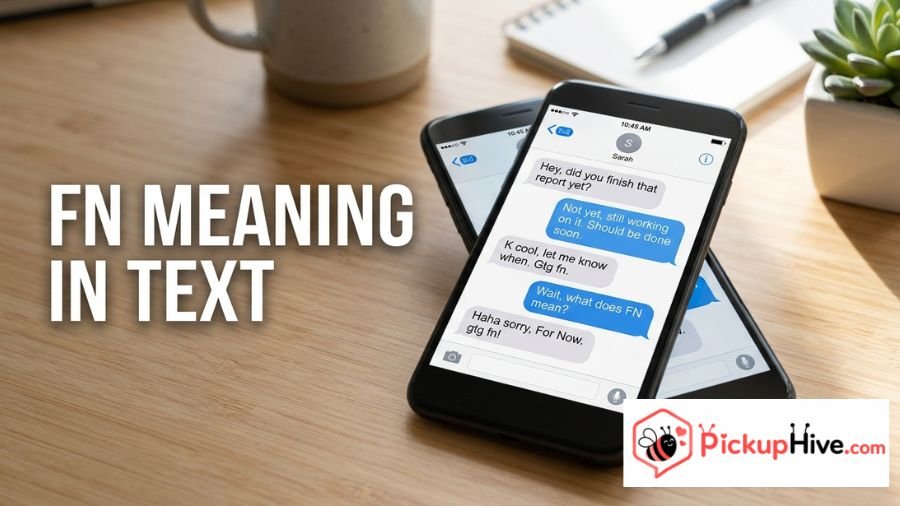
You’re texting a friend about weekend plans when they suddenly reply, “I can’t FN deal with this right now.” You pause and wonder about the FN Meaning In Text because the two-letter abbreviation isn’t always obvious. The answer isn’t always clear because short abbreviations can change meaning depending on the sentence, platform, and relationship between the people chatting.
FN is commonly used as a shortened form of “for now” in casual digital communication. However, it can also represent other phrases, including “first name” in forms or personal-information contexts. In some slang-heavy conversations, its meaning can depend heavily on the surrounding words.
People search for this abbreviation because texting language keeps getting shorter and more informal. A two-letter expression may look simple but still create confusion when you don’t know the context.
This guide breaks down the most common meanings, shows how the abbreviation works in real conversations, and explains when you should avoid using it. By the end, you’ll be able to recognize the intended meaning without guessing.
Quick Answer / Quick Definition of “FN Meaning In Text”
FN meaning in text most commonly refers to “for now” when used in casual messaging. It can also mean “first name” in forms or personal-information conversations. The surrounding sentence determines the intended meaning, so context matters more than the two letters alone.
Detailed Meaning Breakdown
Primary Meaning
The most useful casual interpretation of FN is “for now.”
Someone may use it when talking about a temporary situation, decision, plan, or condition. Instead of typing the complete phrase, they shorten it to two letters.
For example:
“I’ll stay here FN.”
This means:
“I’ll stay here for now.”
Another example is:
“That’s all I need FN.”
The speaker means that what they have is enough for now, although that could change later.
This usage is especially natural in quick messages where people already understand the conversation. I’ve noticed that short abbreviations like this work best when the surrounding sentence makes the meaning obvious.
Secondary Meanings
Another established meaning of FN is “first name.” You’ll usually encounter this interpretation outside ordinary texting.
For example, someone completing an online form might see:
“Enter FN and LN.”
Here, FN means “first name,” while LN means “last name.”
The abbreviation may also appear in notes, spreadsheets, databases, usernames, or workplace documents where space-saving abbreviations are common.
In some online communities, FN can have specialized meanings connected to gaming, technology, organizations, or personal terminology. Those meanings shouldn’t automatically be applied to a casual text.
Rare or Misinterpreted Meanings
A common mistake is assuming every occurrence of FN has one universal definition.
That’s not how abbreviations work.
If someone writes:
“I’ll figure it out FN.”
“for now” makes sense.
But if a form says:
“FN: Sarah”
“first name” is much more likely.
The surrounding words, subject, and communication setting provide the clue. When the sentence doesn’t give enough information, asking what the person meant is better than confidently choosing the wrong interpretation.
What “FN Meaning In Text” Means in Different Contexts

In Texting and Messaging
In everyday texting, FN can be used as a compact way to say “for now.” It usually describes something temporary.
For example:
“Let’s just leave it FN.”
The person is suggesting that the current arrangement should remain unchanged temporarily.
Another message could be:
“I’m working from home FN.”
That suggests working from home is the current arrangement, but the speaker hasn’t necessarily said it will continue permanently.
The tone is generally casual. If you’re texting someone you know well, the abbreviation may feel completely normal. In a serious conversation, however, spelling out “for now” can make your meaning clearer.
On Social Media Platforms
On Instagram, Snapchat, TikTok, and Threads, abbreviations often appear in comments, DMs, captions, and replies.
A TikTok commenter might write:
“I’m keeping this outfit FN.”
The intended idea could be that the person is keeping the outfit choice temporarily.
On Instagram, someone might send:
“This is my favorite FN.”
Here, the meaning can become unclear because the sentence isn’t complete enough to establish what FN represents. It could even be a personal shorthand.
Snapchat conversations tend to tolerate more abbreviated language because messages are often quick and informal. Threads posts, meanwhile, may use abbreviations as part of conversational commentary.
The platform matters, but sentence context still matters more.
In Dating and Relationships
In romantic conversations, FN can sometimes mean “for now” when discussing plans, feelings, or relationship arrangements.
For example:
“Let’s keep things casual FN.”
That means the person wants the situation to remain casual for the time being.
Another example:
“I’m happy being single FN.”
The speaker isn’t necessarily saying they never want a relationship. They’re describing their current preference.
This is where tone becomes especially important. A short message can sound neutral, cautious, or emotionally distant depending on what came before it.
In Professional Communication
In professional settings, FN may more naturally mean “first name” than “for now,” particularly in forms, spreadsheets, customer records, or internal notes.
For example:
“Please enter FN and employee ID.”
Here, there’s little reason to interpret FN as slang.
Using FN to mean “for now” in a formal email can create unnecessary confusion. I generally recommend writing the full phrase in professional communication unless your workplace already uses the abbreviation.
Cultural or Regional Differences
Digital abbreviations don’t always spread evenly across age groups or communities.
Younger users who frequently communicate through social platforms may be more comfortable with compressed language. Older users or people who don’t regularly use texting slang may interpret FN differently.
Regional differences can matter too, especially when abbreviations overlap with workplace or technical terminology.
So when considering FN meaning in text, don’t look only at the letters. Think about who wrote it, where they wrote it, and what they were discussing.
Also Read This: JSP Meaning In Text
Tone, Psychology & Why People Use It
Why People Use It & What It Signals Socially
People shorten phrases because texting rewards speed and convenience.
Writing FN instead of “for now” saves only a couple of characters, but frequent texters naturally develop shorthand habits. It can also make a message feel informal and conversational.
For example:
“I’ll use this FN.”
The message sounds quick and relaxed.
The abbreviation doesn’t automatically signal friendliness or negativity. Its social meaning comes mainly from the rest of the message.
Emotional Layer Behind It
The same abbreviation can carry different emotional tones.
A friendly message might say:
“I’m good FN, don’t worry!”
A neutral message could be:
“We’ll keep the plan FN.”
A colder message might appear in:
“That’s what we’re doing FN.”
Notice that the letters themselves don’t create the emotional tone. The surrounding language does.
That’s why reading only the abbreviation can lead to incorrect assumptions.
10 Real Conversation Examples (Explained)
1. Temporary Plan
Message: “I’ll stay here FN.”
Intended meaning: The person will stay there for now.
Tone: Neutral and practical.
Likely interpretation: The arrangement may change later.
2. Work Situation
Message: “I’m remote FN.”
Intended meaning: The person is working remotely for now.
Tone: Casual.
Likely interpretation: Remote work is currently temporary or undecided.
3. Personal Choice
Message: “I’m not buying one FN.”
Intended meaning: The person doesn’t plan to buy one right now.
Tone: Neutral.
Likely interpretation: They haven’t ruled it out permanently.
4. Relationship Context
Message: “We’re keeping it casual FN.”
Intended meaning: They want the relationship to remain casual for the time being.
Tone: Careful and potentially serious.
Likely interpretation: The speaker isn’t promising a future relationship.
5. Money Discussion
Message: “I can’t afford it FN.”
Intended meaning: The person can’t afford it at the moment.
Tone: Straightforward.
Likely interpretation: Their financial situation could change.
6. Form Context
Message: “Put your FN here.”
Intended meaning: Enter your first name.
Tone: Instructional.
Likely interpretation: FN means “first name,” not “for now.”
7. Gaming Conversation
Message: “I’ll use this setup FN.”
Intended meaning: The player will use the current setup temporarily.
Tone: Casual.
Likely interpretation: They may change their setup later.
8. Social Media Comment
Message: “This is my favorite FN.”
Intended meaning: Unclear without additional context.
Tone: Informal.
Likely interpretation: The reader needs more information before choosing an interpretation.
9. Friend Conversation
Message: “Let’s leave everything FN.”
Intended meaning: Don’t make further changes for the moment.
Tone: Calm.
Likely interpretation: The current arrangement should remain temporarily.
10. Workplace Form
Message: “FN required before submission.”
Intended meaning: A first name is required.
Tone: Formal and administrative.
Likely interpretation: FN clearly means “first name.”
Where Misunderstandings Happen
Context Confusion
The biggest problem with FN is that two letters can represent different phrases.
A casual conversation about plans may point toward “for now,” while a registration form almost certainly points toward “first name.”
When the sentence is short, the intended meaning may not be obvious.
Generational Gap
Someone familiar with texting abbreviations may immediately understand a shortened phrase.
Another person might wonder whether FN is an acronym, typo, username reference, or technical term.
This difference is especially noticeable when people from different age groups communicate through text.
Platform Differences
A form, email, Instagram DM, gaming chat, and workplace spreadsheet can all use the same abbreviation differently.
That’s why copying an interpretation from one platform to another can be risky. The communication environment provides valuable clues.
Similar Words, Symbols, or Abbreviations
| Term | Meaning | How It Differs from FN Meaning In Text |
|---|---|---|
| FYI | For your information | Gives information rather than describing a temporary situation |
| ATM | At the moment | Often describes the present situation more directly |
| RN | Right now | Usually focuses specifically on the current moment |
| TTYL | Talk to you later | Refers to ending or postponing a conversation |
| IDK | I don’t know | Expresses uncertainty |
| BTW | By the way | Introduces an additional point |
| IMO | In my opinion | Signals a personal viewpoint |
| LN | Last name | Often paired with FN on forms |
| ASAP | As soon as possible | Describes urgency rather than temporary status |
When Not to Use “FN Meaning In Text”
Professional Risks
Avoid using FN as “for now” when communicating with customers, managers, clients, or people who may not know your shorthand.
Instead of:
“We’ll use this FN.”
write:
“We’ll use this for now.”
The extra words remove ambiguity.
Cultural Risks
Not everyone interprets abbreviations in the same way. If you’re communicating across cultures or with someone unfamiliar with English texting slang, avoid unnecessary shortcuts.
Clear language travels better.
Tone Risks
Short abbreviations can sometimes make a serious message feel rushed.
If you’re discussing a relationship, disagreement, job issue, or sensitive decision, spelling out the phrase can make your meaning easier to understand.
Expert Tips for Using “FN Meaning In Text” Correctly
- Read the whole sentence first before deciding what FN means.
- Look at the conversation topic for clues.
- In casual texting, consider “for now” when the message describes a temporary situation.
- In forms, records, or databases, consider “first name.”
- Don’t assume an abbreviation has one meaning everywhere.
- If the message is unclear, ask for clarification rather than guessing.
- Use the full phrase in formal emails when clarity matters.
- Pay attention to the writer’s normal texting habits.
- Consider the platform where the abbreviation appears.
- Don’t interpret emotional meaning from FN alone.
Frequently Asked Questions
What does FN mean in text messages?
FN meaning in text messages commonly refers to “for now” when the conversation involves a temporary situation, plan, or choice. However, FN can also mean “first name” in forms or administrative contexts. The words surrounding the abbreviation usually reveal which interpretation makes sense.
Is FN positive or negative?
FN is neither inherently positive nor negative. It’s generally a neutral abbreviation. The emotional meaning comes from the complete message. “I’m staying here FN” sounds practical, while “We’re keeping things casual FN” may carry more emotional weight because of the relationship context.
Can FN have a romantic meaning?
Yes, FN can appear in romantic conversations, particularly when “for now” describes a relationship decision or temporary feeling. For example, someone might say they’re happy being single FN. That doesn’t automatically indicate rejection or commitment; the surrounding conversation determines the intended message.
What does FN mean on Instagram?
On Instagram, FN may mean “for now” in casual DMs, comments, or captions when the sentence describes a temporary situation. However, Instagram users can also create personal shorthand. If the surrounding text doesn’t make the meaning obvious, you shouldn’t assume one definition.
What does FN mean on Snapchat?
On Snapchat, FN can be used as casual shorthand for “for now.” Because Snapchat conversations are often quick and informal, abbreviations can appear frequently. Still, the abbreviation isn’t exclusive to that meaning, so the topic of the conversation should guide your interpretation.
Does FN mean first name?
Yes. FN can mean “first name,” especially on forms, applications, spreadsheets, databases, and other places where personal information is entered. When you see FN beside LN, it usually means first name and last name, respectively.
Is FN the same as RN or ATM?
Not exactly. RN usually means “right now,” while ATM commonly means “at the moment.” FN can mean “for now,” which often suggests a temporary condition rather than simply describing what is happening at this exact moment.
How should I respond when someone says FN?
First, determine whether “for now” fits the sentence. If it does, respond normally based on the underlying message. If FN appears ambiguous, you can simply ask, “What do you mean by FN here?” A quick clarification is better than building a response around the wrong interpretation.
Final Summary & Smart Usage Advice
Understanding FN meaning in text becomes much easier when you stop looking at the two letters by themselves. In casual messaging, “for now” is an important interpretation, especially when someone is describing a temporary plan, decision, or situation. In forms and administrative settings, “first name” is another common meaning.
The surrounding sentence is your strongest clue. Look at the topic, platform, relationship between the speakers, and the words immediately before and after FN.
If a friend says, “I’ll keep it FN,” the temporary meaning may be clear. If a form says “FN” beside “LN,” the personal-information meaning is much more likely.
The safest approach is simple: don’t force one definition onto every conversation. Abbreviations are shortcuts, and shortcuts depend on context.
For casual texting, FN can save time when everyone understands the shorthand. For professional or sensitive communication, writing the full phrase is usually clearer.
Once you consider context instead of the abbreviation alone, this two-letter term becomes much easier to interpret.
Final takeaway: When you see FN, read the sentence first and the abbreviation second.

Hi, I’m Jackson Hayes, a digital content writer at PickupHive.com passionate about creating clever pickup lines and entertaining conversation starters.
