






















IDTS Meaning in Text: Definition, Context, Examples, and Modern Usage (2026 Guide)
When you first search IDTS Meaning In Text, you may have seen the abbreviation in a message and wondered what the person actually meant. Imagine texting a friend about weekend plans and getting a quick reply: “IDTS.” You pause for a second and think, “What does that mean?” If you’ve come across IDTS in texts, DMs, comments, or group chats, you’re definitely not alone. Short internet abbreviations can make a simple conversation surprisingly confusing.
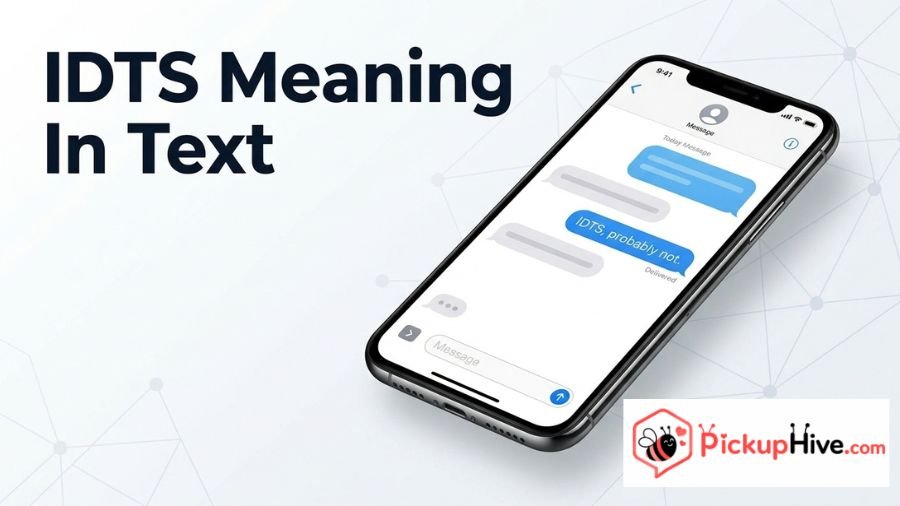
The abbreviation IDTS usually means “I Don’t Think So.” People use it when they disagree, doubt something, or don’t believe a suggestion is likely to happen. The expression can sound casual, uncertain, playful, or slightly dismissive depending on the conversation.
This abbreviation remains useful because texting culture favors quick replies. Instead of typing four words, someone can simply write “IDTS” and move on. The surrounding message often matters more than the abbreviation itself. A friendly conversation can make it sound harmless, while a tense exchange can make the same two letters feel cold.
Below, you’ll learn exactly what IDTS means, how people use it in different settings, and how to understand its tone without overthinking a short reply.
Quick Answer / Quick Definition of “IDTS Meaning in Text”

IDTS means “I Don’t Think So” in texting and online communication. It is commonly used to express doubt, disagreement, or uncertainty about something someone has said or suggested. In simple terms, when someone replies “IDTS,” they usually mean “I don’t believe so” or “Probably not.”
Detailed Meaning Breakdown
Primary Meaning
The primary IDTS meaning in text is “I Don’t Think So.” It is an informal way to disagree with a statement or answer a question negatively without simply saying “no.”
For example:
“Do you think Jake is coming tonight?”
“IDTS.”
Here, the person isn’t completely certain. They’re saying they don’t think Jake will come.
The phrase can also soften disagreement. “No” sounds definite, while “IDTS” leaves some room for uncertainty.
Secondary Meanings
In casual conversations, IDTS can communicate several closely related ideas:
- Probably not
- I doubt it
- I don’t believe so
- I don’t agree
- I don’t think that’s true
The exact meaning depends on what came before it. If someone asks, “Will it rain tomorrow?” IDTS may express uncertainty. If someone says, “That movie was amazing,” IDTS may indicate disagreement.
Rare or Misinterpreted Meanings
IDTS doesn’t normally have a completely different secret meaning in everyday texting. Most uses point back to “I Don’t Think So.”
However, beginners sometimes interpret it as an angry rejection. That’s not always correct. The abbreviation itself isn’t automatically rude. Punctuation, previous messages, and the relationship between the people involved can change how it feels.
What “IDTS Meaning in Text” Means in Different Contexts
In Texting and Messaging
In ordinary texting, IDTS is a quick way to show doubt or disagreement.
“Are you going to the party?”
“IDTS, I have too much homework.”
Here, the sender means they probably aren’t going.
Another example:
“I think Sam already left.”
“IDTS. His car is still outside.”
The second person disagrees but gives a reason.
On Social Media Platforms
On Instagram, Snapchat, TikTok, and Threads, IDTS can appear in comments, DMs, captions, replies, and stories.
A TikTok comment might say:
“This is definitely the best version.”
“IDTS 😂”
The abbreviation can feel playful when combined with an emoji.
On Instagram, someone might use it in a DM:
“Do you think she’ll post the pictures tonight?”
“IDTS.”
On Snapchat, the short form fits naturally into fast conversations. Threads users may use it when responding to someone’s opinion or prediction.
The platform usually doesn’t change the basic meaning. The surrounding tone does.
In Dating and Relationships
In dating conversations, IDTS can express uncertainty about plans, feelings, or someone’s behavior.
“Do you think he actually likes me?”
“IDTS. He hasn’t replied all day.”
It can also appear during playful flirting:
“You’d miss me if I disappeared.”
“IDTS 😏”
Here, the sender may be teasing rather than seriously rejecting the idea.
In Professional Communication
IDTS is generally too casual for formal workplace communication. A coworker might understand it, but a client, manager, or professional contact could find it overly informal.
Instead of:
“IDTS. The deadline is realistic.”
A clearer professional response would be:
“I don’t think the deadline is realistic.”
The full sentence removes ambiguity and sounds more appropriate in business communication.
Cultural or Regional Differences
The basic phrase is widely understandable among English-speaking internet users, but familiarity varies by age, online habits, and communication style.
Younger users who regularly use texting abbreviations may recognize IDTS immediately. Someone who rarely uses internet slang may need the phrase explained.
The meaning generally stays the same across regions, although tone can vary based on personal communication habits.
Also Read This: NMMS Meaning In Text
Tone, Psychology & Why People Use It
Why People Use It & What It Signals Socially
People use IDTS because it’s short, convenient, and less absolute than “no.” It allows someone to disagree without writing a full sentence.
For example:
“Think we’ll get there before 8?”
“IDTS.”
That response communicates doubt while leaving room for the possibility that the prediction could be wrong.
Emotional Layer Behind It
The tone can range from friendly to cold.
Friendly:
“IDTS 😂 You always say that!”
Neutral:
“IDTS. The store closes at six.”
Cold:
“IDTS.”
A short response with no explanation may feel dismissive, especially during a serious conversation. I usually look at the previous few messages before judging the tone of a two-word reply.
10 Real Conversation Examples (Explained)
1. Making Plans
Message: “Are you coming to dinner?” — “IDTS.”
Meaning: Probably not. Tone: Neutral. The person may already have another commitment.
2. Predicting an Event
Message: “Will they cancel school tomorrow?” — “IDTS.”
Meaning: I don’t think they’ll cancel it. Tone: Uncertain rather than definite.
3. Disagreeing With an Opinion
Message: “That was the funniest movie ever.” — “IDTS.”
Meaning: I disagree. Tone: Mildly negative, but not necessarily hostile.
4. Casual Teasing
Message: “You definitely missed me.” — “IDTS 😂”
Meaning: I don’t think so, or I’m jokingly denying it. Tone: Playful.
5. Dating
Message: “Do you think she likes him?” — “IDTS.”
Meaning: The sender doesn’t believe she has romantic interest. Tone: Matter-of-fact.
6. Schoolwork
Message: “I think this answer is correct.” — “IDTS.”
Meaning: I don’t believe the answer is right. Tone: Direct.
7. Weather
Message: “Think it’ll snow tonight?” — “IDTS.”
Meaning: Probably not. Tone: Casual and uncertain.
8. Social Media
Message: “Do you think that creator will respond?” — “IDTS.”
Meaning: I doubt they’ll respond. Tone: Casual prediction.
9. Group Chat
Message: “We’re finishing this project tonight, right?” — “IDTS 😭.”
Meaning: The sender doubts the group will finish. Tone: Humorous frustration.
10. Serious Conversation
Message: “Do you think he’ll apologize?” — “IDTS.”
Meaning: I don’t think he will. Tone: More serious because of the subject.
Where Misunderstandings Happen
Context Confusion
The biggest problem is assuming IDTS always means a firm “no.” Sometimes it expresses uncertainty rather than complete rejection.
Generational Gap
Someone unfamiliar with texting slang may not recognize the abbreviation. In that case, they could mistake it for a typo or ask what it means.
Platform Differences
The same IDTS reply can feel different depending on whether it’s sent privately, posted publicly, or used in a playful comment. Emojis and surrounding text can soften its tone.
Similar Words, Symbols, or Abbreviations
| Term | Meaning | How It Differs from IDTS |
|---|---|---|
| IDK | I Don’t Know | Shows uncertainty rather than disagreement |
| IMO | In My Opinion | Introduces a personal view |
| TBH | To Be Honest | Signals frankness or honesty |
| NGL | Not Gonna Lie | Introduces a candid statement |
| Nope | No | Usually more direct |
| Probably Not | Unlikely | Similar meaning but not abbreviated |
| I Doubt It | I don’t believe it will happen | Often sounds more skeptical |
| Maybe | Possibly | More open-ended and less negative |
When Not to Use “IDTS Meaning in Text”
Professional Risks
Avoid IDTS in formal emails, reports, applications, or client messages. The abbreviation can make your response look overly casual.
Cultural Risks
If you’re speaking with someone who isn’t familiar with internet slang, spell out the phrase. Clear language is usually better than making the reader decode an abbreviation.
Tone Risks
Don’t rely on IDTS when discussing sensitive subjects. A short “IDTS” can sound dismissive when the other person expects empathy or explanation.
Expert Tips for Using “IDTS Meaning in Text” Correctly
- Use IDTS mainly in casual texts and DMs.
- Remember that it normally means “I Don’t Think So.”
- Consider the question before interpreting the abbreviation.
- Don’t automatically treat IDTS as an angry response.
- Add a reason when the subject is important.
- Use an emoji only when it naturally fits the conversation.
- Avoid it in formal professional writing.
- If someone seems confused, write the full phrase.
- Look at previous messages to understand the intended tone.
- When responding, ask for clarification if the meaning isn’t obvious.
Frequently Asked Questions
1. What does IDTS mean in text?
IDTS usually means “I Don’t Think So.” People use it to express doubt, disagreement, or a negative prediction. It is common in casual texting, social media conversations, and DMs. The abbreviation doesn’t necessarily sound rude; the tone depends on the subject, punctuation, and relationship between the people communicating.
2. Is IDTS positive or negative?
IDTS is usually neutral to mildly negative because it communicates doubt or disagreement. However, it isn’t automatically hostile. Someone saying “IDTS 😂” may simply be joking, while “IDTS.” during a serious discussion can sound much colder.
3. Can IDTS be used romantically?
Yes. IDTS can appear in romantic or dating conversations, especially when someone is discussing attraction, plans, or another person’s feelings. For example, “Do you think she likes him?” followed by “IDTS” means the sender doesn’t think she has romantic interest.
4. How should I respond to IDTS?
Your response should depend on what the person meant. If they’re answering a simple question, you can continue the conversation normally. If their reply seems uncertain, ask something like, “Why do you think so?” This gives them a chance to explain instead of forcing you to guess their tone.
5. Does IDTS mean “I don’t think so” on Snapchat?
Yes. On Snapchat, IDTS generally means “I Don’t Think So,” just as it does in ordinary texting. It may appear in direct messages, replies, or quick conversations. Snapchat’s informal style makes abbreviations like this fairly natural.
6. What does IDTS mean on Instagram?
On Instagram, IDTS normally carries the same meaning: “I Don’t Think So.” It can appear in comments, DMs, replies, or reactions to someone’s prediction or opinion. The surrounding words and emojis help determine whether the response is serious, skeptical, or playful.
7. Is IDTS the same as IDK?
No. IDK means “I Don’t Know,” while IDTS means “I Don’t Think So.” IDK shows that someone lacks an answer or isn’t sure. IDTS usually gives an opinion or prediction, often leaning toward “probably not.”
8. Is IDTS rude?
Not necessarily. The abbreviation itself isn’t inherently rude. A friendly conversation can make it sound completely normal. However, sending only “IDTS” during an emotional or serious discussion may come across as dismissive because it provides little explanation.
Final Summary & Smart Usage Advice
The most common IDTS meaning in text is “I Don’t Think So.” It is a short, informal expression used when someone doubts something, disagrees with an idea, or expects something not to happen.
You’ll most often see IDTS in casual texts, group chats, social media comments, Snapchat messages, Instagram DMs, and other relaxed online conversations. Its meaning stays fairly consistent across these platforms, but its tone can change significantly with context.
A friendly “IDTS 😂” might be playful. A plain “IDTS.” could sound more distant. That’s why it’s better to consider the entire conversation instead of interpreting the abbreviation by itself.
For professional emails, formal documents, and sensitive conversations, spelling out “I don’t think so” is usually clearer. It removes the need for the reader to understand internet shorthand and gives your message a more polished feel.
Once you know what the abbreviation stands for, IDTS is easy to understand. The real trick is recognizing whether the person is being uncertain, disagreeing, teasing, or simply giving a quick negative answer.
Remember: IDTS usually means “I Don’t Think So,” but context tells you how strongly the person means it.

Hi, I’m Jackson Hayes, a digital content writer at PickupHive.com passionate about creating clever pickup lines and entertaining conversation starters.
