






















What Does WAT Meaning in Text? Meaning, Context, Examples, and Modern Usage (2026 Guide)
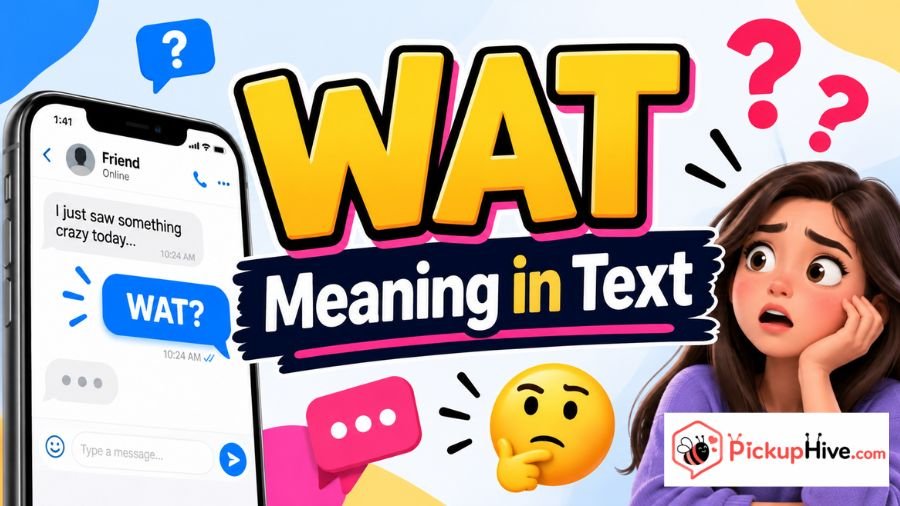
Imagine you’re chatting with a friend about something unbelievable, and they suddenly send you a message that makes absolutely no sense. If you’ve ever wondered about WAT Meaning in Text, this three-letter expression is often used to show confusion, surprise, or disbelief. You might reply with “WAT?” when you want your friend to explain what just happened.
WAT is an informal internet expression commonly used in text messages, gaming chats, social media comments, and everyday online conversations. It often appears when someone wants clarification or reacts to something unexpected. Its unusual spelling also gives it a playful, exaggerated feel that standard English sometimes lacks.
People continue to encounter abbreviations like WAT because online conversations move quickly, and short expressions make reactions easier to type. However, not everyone interprets internet slang the same way.
In this guide, you’ll learn what WAT means, how people use it across different platforms, what its tone suggests, and how to respond naturally without misunderstanding the sender.
Quick Answer: What Does WAT Mean?

WAT means “what” in informal texting and internet slang. People use it to express confusion, surprise, disbelief, or a request for clarification. The unusual spelling often adds a playful or exaggerated tone, especially in casual conversations, memes, and gaming chats.
-
A: I accidentally wore my shirt inside out all day.
-
B: WAT 😂
Detailed Meaning Breakdown
Primary Meaning
The primary meaning of WAT is “what.” It’s a casual, nonstandard spelling used when someone wants to ask a question or react to information they find surprising.
Instead of typing the conventional word, a person writes WAT to make their reaction feel more expressive. It can communicate genuine confusion, playful disbelief, or sudden surprise.
For example, imagine your friend texts you, “I just found out our teacher is a professional singer.” You might respond, “WAT? No way!”
Here, WAT means something like “What did you just say?” or “Is that really true?” The word itself doesn’t explain the entire emotion. The surrounding conversation provides that information.
When people look up WAT Meaning in Text, this is generally the interpretation they’re looking for.
Secondary Meanings
Although “what” is the usual interpretation in casual messaging, WAT can take on slightly different meanings depending on how it’s used.
-
Confusion: Someone doesn’t understand what another person means.
-
Surprise: A message contains unexpected news.
-
Disbelief: The sender finds something difficult to believe.
-
Playful reaction: Someone exaggerates confusion for humor.
-
Request for clarification: The sender wants another person to explain a statement.
Consider this message: “My brother bought a motorcycle without telling anyone.”
A reply like “WAT 😭” might show astonishment rather than actual confusion. The sender understands the words but can’t believe the decision.
In another conversation, someone might write “wat do you mean?” Here, the abbreviation simply replaces the standard spelling of “what.”
Rare or Misinterpreted Meanings
WAT doesn’t have one universal meaning in every online community. In most ordinary text conversations, it means “what,” but specialized settings can use the same letters differently.
For instance, WAT may appear as an acronym for a technical phrase, an organization, or a term specific to a workplace or gaming community. Its meaning can only be established from that context.
It’s also easy to confuse WAT with WATT, which is a unit of electrical power, or WTH, a slang abbreviation often used to express surprise or frustration.
Another common mistake is assuming that WAT always communicates anger. It doesn’t. A person can use it to ask a genuine question, tease a friend, or react to something funny.
The safest interpretation is to read WAT as an informal version of “what” unless the conversation gives you a clear reason to interpret it differently.
What WAT Means in Different Contexts
In Texting and Messaging
In everyday texting, WAT usually appears as a quick reaction to a message that seems confusing, unexpected, or hard to believe. Friends may use it instead of typing a complete question because they already share enough context to understand each other.
For example, suppose someone texts, “I forgot my phone at home, so I called myself from my phone.” You might respond, “WAT 😂.” The reply signals that their explanation sounds ridiculous or funny.
The same letters can also introduce a direct question. Someone might write, “WAT happened after I left?” Here, the person simply wants information.
One small detail makes a difference: punctuation and surrounding words can change the tone. “Wat?” may sound curious, while “WAT!!!” often communicates stronger surprise. Adding a laughing emoji can make the reaction seem friendly rather than critical.
When interpreting WAT Meaning in Text, pay attention to whether the sender is responding to surprising news or genuinely asking you to explain something.
On Social Media Platforms
WAT is useful on social media because people often react to short videos, unusual posts, unexpected announcements, and confusing comments without writing lengthy responses.
-
Instagram: Someone might comment “WAT 😭” beneath an unbelievable Reel or send it in a DM after seeing an unexpected photo.
-
Snapchat: A friend may send “wattt?” after receiving a surprising Snap, especially when the image needs an explanation.
-
TikTok: Users might comment “WAT is happening?” under a confusing video, a sudden plot twist, or an absurd comedy clip.
-
Threads: Someone may reply with “WAT?” when a post makes an unexpected claim or leaves out important information.
These are examples of possible usage, not fixed platform rules. WAT doesn’t have a separate official meaning on Instagram, Snapchat, TikTok, or Threads.
Its style may vary with the audience. A public comment might exaggerate surprise to entertain other viewers, while a private message may express genuine confusion.
If you encounter WAT Meaning in Text while browsing social media, look at the original post and the replies around it. Those details usually reveal whether the sender is joking, questioning a claim, or asking for clarification.
In Dating and Relationships
In dating conversations, WAT can communicate surprise, curiosity, or playful disbelief. Its emotional meaning depends heavily on the subject being discussed and the relationship between the people.
Imagine someone you’ve been talking to texts, “I dreamed about you last night.” You might reply, “WAT? 😂 Tell me everything.”
In this situation, the response shows curiosity and perhaps excitement. It invites the other person to continue the conversation.
Now imagine your partner says, “I booked us a surprise weekend trip.” A response such as “WATTT, seriously?” expresses happy astonishment.
However, WAT isn’t automatically romantic or flirtatious. If someone uses it after an uncomfortable confession or an unexpected relationship question, they may simply be shocked or unsure how to respond.
Avoid interpreting three letters as proof of someone’s feelings. Look at their other messages, the conversation’s history, and how they normally communicate.
A friendly response usually works best when the meaning is unclear. Asking “Wait, what do you mean?” gives the other person an opportunity to explain without turning a small misunderstanding into an argument.
In Professional Communication
WAT is generally too informal for important workplace messages, client emails, job applications, and professional discussions.
Suppose a coworker sends an unexpected project update. Replying “WAT?” might communicate confusion, but it could also make you sound dismissive or unprepared.
A more professional response would be:
-
“Could you clarify what changed?”
-
“I’m not sure I understand. Could you explain?”
-
“Could you provide a little more context?”
These alternatives express the same basic need for clarification without relying on slang.
In a casual team chat where coworkers regularly joke with each other, WAT might be perfectly understandable. For example, a colleague announcing that the office coffee machine has broken for the third time could receive a playful “WAT 😂.”
Still, familiarity doesn’t eliminate every communication risk. Written messages lack vocal tone and facial expressions, so even a harmless reaction can be misinterpreted.
When you’re communicating with someone you don’t know well, clear wording is more valuable than internet slang. Save WAT for informal exchanges where its meaning and tone are unlikely to cause confusion.
Cultural or Regional Differences
WAT is widely recognizable in internet slang, but spelling preferences and interpretations can differ among age groups, online communities, and English-speaking regions.
Some people prefer “what,” while others use “wat,” “wut,” or “whut” to create a more playful voice. These spellings generally represent informal variations rather than separate dictionary meanings.
Younger internet users may recognize WAT from memes, gaming conversations, and social media comments. Other people may interpret it as a typo or simply prefer standard spelling.
Regional language habits can also influence how someone writes English online. A person who uses English as an additional language may recognize the intended meaning but be less familiar with its humorous associations.
There’s no reliable rule that everyone in a particular country or generation interprets WAT identically. Personal habits matter just as much as location.
If a message seems ambiguous, don’t assume the sender intended sarcasm or disrespect. Ask what they mean instead of assigning an emotion based on spelling alone.
Also Read This: Evil Eye Color Meanings
Where Is WAT Used?
WAT appears in several online environments where people communicate quickly and react to messages in an informal style.
-
Snapchat 👻: A friend might reply “WAT?” to a Snap showing an unexpected event or unusual situation.
-
TikTok 🎵: A viewer may comment “WAT is going on here?” beneath a strange or surprising video.
-
Instagram DMs 📩: Someone could text “WAT 😂” after receiving an unbelievable story from a friend.
-
WhatsApp 💬: A person might write “wat happened?” when asking for an explanation in a family or friends’ group chat.
-
Gaming chats 🎮: A player may type “WAT?” after an opponent performs an unexpected move or something unusual happens during a match.
These examples demonstrate how the same abbreviation can fit different conversations without changing its basic meaning.
In terms of formality, WAT is casual rather than formal. It may be acceptable in semi-formal conversations between familiar coworkers or classmates, depending on the relationship. In formal communication, standard words such as “what?” or “could you clarify?” are usually better choices.
The main idea is simple: WAT works best when both people understand the informal style being used.
Tone, Psychology & Why People Use It
Why People Use It and What It Signals Socially
People use WAT because it is short, easy to type, and expressive. A three-letter reaction can communicate an immediate response without requiring a full sentence.
Online conversations often happen quickly. When a friend shares unexpected news, typing WAT may feel more natural than composing a carefully worded question.
The abbreviation can also create a sense of shared humor. Friends who regularly exchange memes may use exaggerated spellings to show that they’re reacting playfully rather than taking everything literally.
For example, someone might text, “I just ate cereal with a fork because all the spoons were dirty.” A friend could respond, “WAT is wrong with you 😂.”
The reply is teasing, not necessarily hostile. Their existing friendship helps establish the intended meaning.
WAT can also signal that the sender needs more information. A person who receives an unclear instruction might simply respond, “WAT do you mean by that?”
Although the wording is informal, the underlying purpose remains understandable: the sender wants to react, question, or clarify something.
It’s worth remembering that short messages are efficient but incomplete. WAT communicates a reaction, yet it doesn’t always reveal exactly what the person is thinking.
Emotional Layer Behind It
The emotional tone of WAT depends on several clues, including punctuation, emojis, the previous message, and the relationship between the people involved.
Friendly tone: “WAT 😂” after a ridiculous joke usually suggests amusement or playful disbelief.
Neutral tone: “Wat happened next?” may simply introduce a question without any strong emotional meaning.
Excited tone: “WATTT, you got the job?” communicates enthusiasm and surprise.
Frustrated tone: “WAT are you even talking about?” may suggest irritation, particularly if the conversation has already become tense.
Confused tone: “WAT? I thought the meeting was tomorrow” signals that the sender has received conflicting information.
Notice that the emotional difference doesn’t come from the abbreviation alone. The rest of the message provides important clues.
In some conversations, repeated letters make a reaction more dramatic. “WATTT” often feels more expressive than “wat,” although individual habits vary.
If you aren’t sure how to interpret a message, consider what happened immediately beforehand. A funny story, an unexpected announcement, and a disagreement can all produce the same three-letter response for completely different reasons.
10 Real Conversation Examples of WAT (Explained)
The following conversations show how WAT can communicate different reactions. The important detail is not just the abbreviation but the situation in which it appears.
Example 1: Reacting to Unexpected News
Message: “I got tickets to see our favorite band tomorrow!”
Reply: “WATTT? You’re serious?”
Intended meaning: The sender is surprised and wants confirmation.
Emotional tone: Excited and enthusiastic.
Likely interpretation: The person finds the news exciting and almost unbelievable. The repeated letters emphasize the reaction.
Example 2: Asking About a Confusing Statement
Message: “The store is closing early because it opened late.”
Reply: “WAT? How does that make sense?”
Intended meaning: The sender doesn’t understand the explanation.
Emotional tone: Confused, possibly amused.
Likely interpretation: The person wants a clearer explanation rather than simply expressing surprise.
Example 3: Responding to a Funny Mistake
Message: “I waved at someone for five minutes before realizing they were waving at the person behind me.”
Reply: “WAT 😭 That’s so embarrassing.”
Intended meaning: The sender is reacting to an awkward but funny experience.
Emotional tone: Playful and sympathetic.
Likely interpretation: The person finds the story funny and is sharing the embarrassment rather than criticizing the storyteller.
Example 4: Showing Romantic Surprise
Message: “I think I might have a crush on you.”
Reply: “WAT? Wait, actually?”
Intended meaning: The recipient is surprised by a romantic confession.
Emotional tone: Curious and possibly excited.
Likely interpretation: The person needs a moment to process the confession. Their response alone doesn’t confirm whether the attraction is mutual.
Example 5: Questioning an Unexpected Decision
Message: “I quit my job today without having another one lined up.”
Reply: “WAT? What happened?”
Intended meaning: The sender is surprised and wants to understand the circumstances.
Emotional tone: Concerned and inquisitive.
Likely interpretation: The person may be worried about the decision rather than judging it. The follow-up question helps distinguish concern from criticism.
Example 6: Reacting to a Gaming Surprise
Message: “The other team won the match with one second left.”
Reply: “WAT?! HOW?”
Intended meaning: The player is astonished by an unexpected result.
Emotional tone: Intense excitement or disbelief.
Likely interpretation: The sender wants to know how the last-second win happened. Capital letters and punctuation make the reaction feel more dramatic.
Example 7: Responding to a Strange Social Media Post
Message: “Someone posted a video of a person making pizza in a washing machine.”
Reply: “WAT is going on online?”
Intended meaning: The sender is questioning the unusual content.
Emotional tone: Amused disbelief.
Likely interpretation: The person finds the video bizarre and may be inviting the other person to laugh about it.
Example 8: Clarifying a Plan
Message: “Meet me at the usual place, but not the place we usually go.”
Reply: “WAT do you mean? 😂”
Intended meaning: The sender needs clarification about the meeting location.
Emotional tone: Lighthearted confusion.
Likely interpretation: The message is unclear, and the laughing emoji suggests the sender isn’t necessarily upset. A specific location is needed to resolve the confusion.
Example 9: Reacting to a Surprising Achievement
Message: “I finished the entire project in one afternoon.”
Reply: “WAT? I thought it would take you a week!”
Intended meaning: The sender is surprised by the speed of the accomplishment.
Emotional tone: Impressed and astonished.
Likely interpretation: The person didn’t expect the task to be completed so quickly. Depending on the relationship, the response may also be a compliment.
Example 10: Expressing Frustration During an Argument
Message: “You agreed to help me, but now you’re saying you never did.”
Reply: “WAT are you talking about?”
Intended meaning: The sender challenges the other person’s statement.
Emotional tone: Defensive or frustrated.
Likely interpretation: Unlike the earlier playful examples, this response may signal tension. A calm follow-up explaining what was originally agreed upon would be more helpful than trading angry messages.
Together, these examples demonstrate why WAT doesn’t have one fixed emotional meaning. The surrounding words and relationship determine how the response is likely to be understood.
Where Misunderstandings Happen
Context Confusion
The most common misunderstanding occurs when someone assumes WAT always means the same thing emotionally.
A message such as “WAT?” could express curiosity, shock, confusion, or disbelief. Without context, it’s difficult to know which interpretation is correct.
Imagine receiving “WAT” after sharing good news. You might assume the other person is happy for you, but they could simply be asking for more details.
Similarly, a response without an emoji or follow-up sentence may seem cold even when the sender is genuinely curious.
The best way to avoid this problem is to read the complete exchange. If the intended meaning remains unclear, ask a direct question rather than guessing.
Generational Gap
Different age groups can have different levels of familiarity with internet slang. Someone who frequently uses online abbreviations may understand WAT immediately, while another person might consider it a spelling mistake.
Neither interpretation automatically means the person is wrong. Informal language changes as online communities adopt new expressions and develop different habits.
For example, a teenager might use “WATTT” to exaggerate a funny reaction, whereas a parent might prefer to type the complete word.
If you’re communicating across generations, clear wording can prevent unnecessary confusion. There’s no need to abandon slang entirely; simply adjust your language to suit the person you’re talking to.
Platform Differences
The same message can feel different depending on where it appears.
In a private conversation with a close friend, “WAT 😂” may sound affectionate and funny. Under a public post, “WAT?” could look dismissive because other readers don’t know the relationship between the participants.
Gaming chats often favor fast reactions, while professional messaging may require more precise explanations. Social media comments can also attract audiences who interpret messages differently from the original recipient.
Don’t assume that a message’s tone is obvious just because it makes sense to you. When the audience is unfamiliar with your humor or communication style, a few extra words can make your meaning clearer.
Similar Words, Symbols, or Abbreviations
Several internet expressions resemble WAT because they communicate confusion, surprise, or a request for clarification. However, they aren’t perfect substitutes.
| Term | Meaning | How It Differs from WAT |
|---|---|---|
| What | A standard question word | The conventional spelling used in formal and informal English |
| Wut | Playful spelling of “what” | Often has a deliberately silly or exaggerated feel |
| Whut | Informal variation of “what” | Can suggest a humorous or exaggerated reaction |
| WTH | What the heck | Usually expresses stronger surprise, confusion, or frustration |
| WTF | What the f*** | More forceful and potentially offensive than WAT |
| Huh? | A request for clarification or a reaction | Often sounds more conversational and can indicate that someone didn’t hear or understand |
| IDK | I don’t know | Expresses uncertainty about an answer rather than asking “what?” |
| OMG | Oh my God | Primarily signals surprise, excitement, or disbelief |
| WYD | What are you doing? | Asks about someone’s current activity rather than reacting to information |
| FR | For real | Often expresses agreement, sincerity, or disbelief, depending on context |
These expressions overlap in some conversations, but their purposes differ. For example, WAT asks for clarification or reacts to something unexpected, while IDK usually communicates that the sender doesn’t know an answer.
Choose the abbreviation that matches your intended meaning instead of treating all internet slang as interchangeable.
When Not to Use WAT
Professional Risks
WAT can make a work conversation sound careless when the situation requires clarity and respect. It’s particularly unsuitable for communicating with clients, managers you don’t know well, or people outside your organization.
For example, if a client sends a confusing invoice, replying “WAT?” doesn’t explain what you need. It may even suggest that you’re criticizing their work.
A better message would be, “Could you clarify this charge? I want to make sure I understand it correctly.”
There are exceptions. Some teams have relaxed communication styles, and coworkers who regularly exchange jokes may understand WAT without any difficulty. Even then, a clear question is preferable when discussing deadlines, payments, responsibilities, or important decisions.
Cultural Risks
Informal abbreviations don’t always translate well across languages and cultures. Someone unfamiliar with internet slang might not recognize WAT or understand its humorous tone.
In some situations, a blunt reaction can also be interpreted as disrespectful, especially when discussing sensitive personal news or communicating with someone you don’t know well.
If a friend shares something serious, consider whether a playful reaction is appropriate. A supportive question may be better than an exaggerated response.
Remember that people have different communication preferences. Using standard language when necessary shows consideration without requiring you to change your personality.
Tone Risks
The biggest risk is that WAT can sound more aggressive than intended. Capital letters, repeated letters, and punctuation can intensify its meaning.
Compare these messages:
-
“wat?” sounds like a casual question.
-
“WAT 😂” suggests playful surprise in many conversations.
-
“WAT!!!” can communicate shock or disbelief.
-
“WAT ARE YOU TALKING ABOUT?” may sound confrontational.
These interpretations aren’t universal, but they illustrate how small writing choices influence tone.
If you’re worried that your message might sound rude, add a few explanatory words. For example, “Wait, what? I didn’t know that!” makes your surprise easier to understand.
Expert Tips for Using WAT Correctly
Use these practical tips to make your messages clearer and avoid common internet-slang misunderstandings.
-
Know your audience. Use WAT with friends or online communities that understand informal language.
-
Read the conversation first. Decide whether you’re confused, surprised, or asking for additional information before sending the abbreviation.
-
Use punctuation thoughtfully. A simple question mark often works better than several exclamation marks.
-
Add an emoji when appropriate. A laughing face can make a playful reaction clearer, although emojis shouldn’t replace words when clarity matters.
-
Avoid assuming romantic interest. WAT in a dating conversation signals a reaction, not necessarily attraction.
-
Don’t use it for every question. Standard wording can be more natural when you’re requesting detailed information.
-
Be careful during arguments. A blunt “WAT?” may sound defensive, so explain what you don’t understand instead.
-
Match the conversation’s style. If the other person writes formally, responding with standard English may feel more comfortable.
-
Ask for clarification when needed. If someone sends WAT and you don’t understand their reaction, ask what surprised or confused them.
-
Keep professional messages precise. Use clear questions for work instructions, client concerns, and important decisions.
One useful habit is to think about how your message would sound if spoken aloud. If it could easily come across as an insult, rewriting it with a little more context may prevent an unnecessary misunderstanding.
Frequently Asked Questions About WAT
1. What does WAT mean in text messages?
WAT is an informal spelling of “what.” People use it in text messages to express confusion, surprise, disbelief, or curiosity. For example, if a friend shares unexpected news, replying “WAT?” communicates that you want to know more. The precise tone depends on the conversation and any accompanying words or emojis.
2. Is WAT positive or negative?
WAT can be positive, negative, or neutral. It may express excitement about good news, confusion about an unclear statement, or frustration during an argument. The abbreviation itself doesn’t establish whether the sender feels happy or upset. Read the surrounding messages before deciding how to interpret it.
3. Does WAT mean the same as what?
Generally, yes. WAT is a nonstandard spelling of the English word “what,” commonly used in informal online communication. The main difference is style: WAT can make a reaction feel more casual, playful, or exaggerated. Standard “what” remains the better choice in formal writing and situations that require precise communication.
4. Can WAT have a romantic meaning?
WAT can appear in flirtatious or romantic conversations, especially when someone receives an unexpected compliment, confession, or invitation. However, it doesn’t independently indicate attraction or romantic interest. For example, “WAT? You like me?” may express surprise without confirming how the recipient feels. Consider the full exchange rather than relying on three letters.
5. How should I respond when someone texts WAT?
Start by identifying what the other person might be reacting to. If they seem confused, explain your message more clearly. If they’re surprised by good news, you can provide details or share your excitement. When the meaning isn’t obvious, a simple “What part do you mean?” helps you understand their reaction without making assumptions.
6. Is WAT rude to use in a conversation?
Not necessarily. Among friends, WAT can be a harmless way to express surprise or ask a quick question. However, it may sound abrupt or disrespectful in professional discussions, serious conversations, or exchanges with unfamiliar people. If you want to sound polite, use a complete question that explains what you need clarified.
7. What is the difference between WAT, WUT, and WTF?
WAT and WUT are informal variations of “what,” often used to show confusion or surprise. WUT can sound particularly playful, although usage varies. WTF is a stronger slang expression that includes profanity and may communicate shock, anger, or disbelief. Because WTF can offend some readers, WAT is generally less explicit.
8. Why do people write WAT instead of what?
People often choose WAT because it’s short, recognizable, and expressive in casual digital conversations. The unusual spelling can exaggerate surprise or create a humorous tone, especially in memes, gaming chats, and messages between friends. Others may simply prefer the spelling they’ve seen in their online communities. It isn’t necessary to use WAT to communicate effectively.
Final Summary & Smart Usage Advice
Understanding WAT Meaning in Text is straightforward once you recognize its primary purpose. WAT is an informal spelling of “what,” commonly used to communicate surprise, confusion, disbelief, or a request for clarification.
You’ll often see it in text messages, Snapchat conversations, Instagram DMs, TikTok comments, WhatsApp groups, and gaming chats. Someone might type “WAT?” after hearing unexpected news, or use “WAT 😂” to react to a ridiculous story. In each situation, the abbreviation provides a quick response without requiring a complete sentence.
The most important lesson is that WAT doesn’t have a fixed emotional tone. It can sound friendly, curious, excited, or frustrated depending on the surrounding conversation. Capital letters, repeated letters, emojis, and punctuation can influence how the message comes across.
For everyday communication, WAT is usually fine when you’re chatting with friends who understand internet slang. In professional emails, serious discussions, and unfamiliar social situations, standard wording is often more appropriate.
You should also avoid reading too much into a single abbreviation. WAT doesn’t automatically indicate anger, romantic interest, sarcasm, or disrespect. When the meaning isn’t clear, ask the sender what they meant rather than guessing.
Now that you understand the abbreviation, you can recognize it more confidently and choose a suitable response whenever it appears in your messages.
Remember: WAT usually means “what,” but the conversation tells you how the sender feels.

Hi, I’m Harper Collins, a content writer at PickupHive.com where I create fun, romantic, and creative pickup lines to help people start better conversations online.
