
























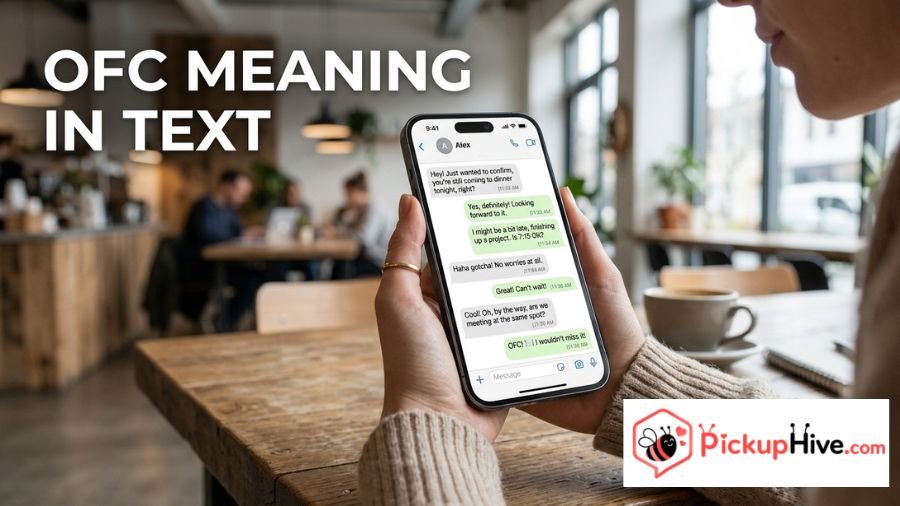
OFC Meaning In Text: Definition, Context, Examples, and Modern Usage (2026 Guide)
You’re texting a friend about weekend plans when they reply, “OFC I’ll come.” You probably understand the feeling right away, even if you haven’t seen the abbreviation before. OFC Meaning In Text is usually simple, but the tone can change depending on who sends it and what comes before or after it.
People search for this abbreviation because texting language changes quickly. Short forms such as OFC save time, fit naturally into casual conversations, and are common in comments, DMs, group chats, and social media posts. Younger users may use them casually, while older readers may stop and wonder what the letters mean.
The good news is that OFC isn’t complicated. In most everyday conversations, it means “of course.” Still, “of course” can sound warm, neutral, playful, or even slightly sarcastic depending on the situation.
In this guide, we’ll look at what OFC means, how people use it, what it sounds like in different situations, and when another phrase may be clearer.
Quick Answer / Quick Definition of “OFC Meaning In Text”
OFC means “of course” in text messages and online conversations. People use it to agree, confirm something, or show that an answer should be obvious. For example, “OFC I can help” simply means “Of course, I can help.” The abbreviation is mainly casual and conversational.
Detailed Meaning Breakdown
Primary Meaning
The primary meaning of OFC is “of course.” It’s an abbreviation created by shortening the phrase to its first letters.
For example:
“Are you coming tonight?”
“OFC!”
Here, the person is clearly saying, “Of course!”
I’ve noticed that the shortest replies often carry more emotion than people expect. A quick “OFC” can sound confident because there’s no hesitation in the response.
Secondary Meanings
Although “of course” is the standard interpretation, the exact message can depend on context.
Someone might write:
“OFC I remember you.”
That can communicate reassurance. In another conversation:
“OFC 😂”
It may sound playful because the emoji changes the emotional feel.
OFC can also appear as part of a longer sentence, such as “OFC not”, “OFC I will,” or “OFC you can.” The basic meaning remains connected to “of course.”
Rare or Misinterpreted Meanings
OFC doesn’t normally represent a completely different phrase in everyday texting. However, people sometimes misunderstand it because abbreviations can have multiple meanings in specialized settings.
If you see OFC in a technical, business, medical, or industry-specific document, don’t automatically assume it means “of course.” The surrounding words should guide your interpretation.
What “OFC Meaning In Text” Means in Different Contexts

In Texting and Messaging
In ordinary texting, OFC is a quick way to agree or confirm something.
“Can you send me the address?”
“OFC, give me a minute.”
The sender isn’t necessarily trying to sound extra enthusiastic. They’re simply answering naturally and quickly.
Another example is:
“OFC you can borrow my charger.”
Here, OFC makes the response sound reassuring and friendly.
On Social Media Platforms
On Instagram, Snapchat, TikTok, and Threads, OFC can appear in captions, comments, DMs, and stories.
A TikTok comment might say:
“OFC this song is still on repeat.”
An Instagram reply could be:
“OFC I liked your post.”
The meaning stays the same, but the style is usually informal. On fast-moving platforms, short abbreviations feel natural because users already expect brief communication.
In Dating and Relationships
In romantic conversations, OFC can show agreement, reassurance, or affection.
“Would you really come see me?”
“OFC I would.”
The phrase can feel warm because the sender is removing doubt.
However, context matters. “OFC” by itself doesn’t automatically indicate romantic interest. It simply confirms something. The relationship, surrounding words, and overall conversation reveal the emotional meaning.
In Professional Communication
OFC is generally best kept for casual workplace chats, if the people involved already communicate informally.
For example:
“Can you join the team call?”
“Of course, I can.”
Using “OFC” in a formal email to a client may look overly casual or unclear. I’d personally spell out “of course” when professionalism matters because clarity is more valuable than saving two seconds.
Cultural or Regional Differences
The basic meaning is widely understood in English-language internet culture, but familiarity varies by age, online habits, and communication style.
Someone who regularly uses texting abbreviations may instantly understand OFC. Another person may prefer complete words.
The tone can also vary. One person may see “OFC” as friendly, while another may read it as blunt. That’s why context matters more than the abbreviation itself.
Tone, Psychology & Why People Use It
Why People Use It & What It Signals Socially
People use OFC mainly because it’s short, fast, and familiar. It reduces typing while preserving the basic meaning of “of course.”
It can signal confidence too. Compare:
“Maybe, I think so.”
with:
“OFC!”
The second response sounds much more certain.
Emotional Layer Behind It
The emotional tone depends heavily on punctuation and surrounding language.
Friendly: “OFC! I’d love to help.”
Neutral: “OFC, I can send it later.”
Playful: “OFC 😂”
Potentially cold: “OFC.”
That last version isn’t automatically rude. Still, a short answer with a period can feel more distant than a longer response.
Also Read This: JSP Meaning In Text
10 Real Conversation Examples (Explained)
1. “Can you help me later?” → “OFC.”
Meaning: Yes, the person can help.
Tone: Neutral and direct.
Likely interpretation: A simple confirmation.
2. “Are you still coming?” → “OFC!”
Meaning: The person definitely plans to come.
Tone: Positive and confident.
Likely interpretation: Strong reassurance.
3. “Do you remember Sarah?” → “OFC lol.”
Meaning: Yes, Sarah is remembered.
Tone: Casual and playful.
Likely interpretation: The question may have seemed obvious.
4. “Can I tell you something private?” → “OFC.”
Meaning: Yes, go ahead.
Tone: Supportive.
Likely interpretation: The sender is giving permission.
5. “Would you choose pizza?” → “OFC 😂”
Meaning: Pizza is an obvious choice for them.
Tone: Humorous.
Likely interpretation: They’re joking about how predictable the answer is.
6. “Will you send me the notes?” → “OFC, tonight.”
Meaning: Yes, and the sender gives a time.
Tone: Helpful and reassuring.
Likely interpretation: A clear commitment.
7. “Are you mad at me?” → “OFC not.”
Meaning: No, they’re not angry.
Tone: Reassuring.
Likely interpretation: The sender wants to remove worry.
8. “Did you actually watch the movie?” → “OFC I did.”
Meaning: Yes, definitely.
Tone: Confident.
Likely interpretation: The sender is emphasizing certainty.
9. “Can I bring my cousin?” → “OFC, bring her.”
Meaning: Permission is given.
Tone: Welcoming.
Likely interpretation: The person is comfortable with the plan.
10. “You knew I was going to say that, right?” → “OFC.”
Meaning: Yes, the answer was predictable.
Tone: Light and knowing.
Likely interpretation: Friendly agreement.
Where Misunderstandings Happen
Context Confusion
The biggest issue is tone. OFC can be friendly in one conversation and sound dismissive in another.
For example, “OFC!” feels enthusiastic, while “OFC.” may feel more restrained.
Generational Gap
Not everyone uses internet abbreviations at the same frequency. Someone unfamiliar with texting slang may not recognize OFC immediately.
This doesn’t mean the abbreviation is difficult. It simply reflects different communication habits.
Platform Differences
On fast social platforms, OFC feels normal. In a formal email, the same abbreviation can appear too casual.
The communication channel changes how the reader interprets the message.
Similar Words, Symbols, or Abbreviations
| Term | Meaning | How It Differs from OFC Meaning In Text |
|---|---|---|
| Of course | Certainly / naturally | Full phrase instead of abbreviation |
| Definitely | Certainly | Stronger emphasis on certainty |
| Sure | Yes / okay | Can be more neutral |
| Yep | Yes | Simple agreement |
| Yup | Yes | Casual agreement |
| Absolutely | Completely / certainly | Often sounds more emphatic |
| FR | For real | Usually expresses agreement or emphasis |
| TBH | To be honest | Introduces honesty or an opinion rather than confirmation |
When Not to Use “OFC Meaning In Text”
Professional Risks
Avoid OFC when writing formal emails, applications, official messages, or client communications unless the setting is clearly informal.
Writing “Of course” takes almost no extra effort and removes uncertainty.
Cultural Risks
Some readers may not know common texting abbreviations. If your audience includes people from different language backgrounds, spelling out the phrase can make your meaning clearer.
Tone Risks
A bare “OFC” can occasionally sound dismissive, especially after a sensitive question.
If someone asks something emotional, a fuller response may work better:
“Of course. You can talk to me.”
That sounds more caring than a two-letter answer.
Expert Tips for Using “OFC Meaning In Text” Correctly
- Use OFC mainly in casual conversations.
- Spell out “of course” in formal writing.
- Look at the relationship before choosing an abbreviation.
- Add context when the question is sensitive.
- Use punctuation carefully because it can affect perceived tone.
- Don’t assume every reader knows texting slang.
- Use “OFC!” when you want a more upbeat feel.
- Consider “of course” when reassurance matters.
- Don’t use abbreviations simply to sound trendy.
- Read the entire conversation before interpreting OFC.
Frequently Asked Questions
1. What does OFC mean in text?
OFC usually means “of course.” It’s a casual abbreviation used in texting, social media, comments, and online chats. People typically use it to agree with someone, confirm a plan, or reassure the other person. The exact emotional tone depends on the surrounding conversation, punctuation, and relationship between the people.
2. Is OFC positive or negative?
OFC is generally neutral to positive because it commonly expresses agreement or confirmation. However, tone can change its effect. “OFC!” may sound enthusiastic, while a short “OFC.” could seem blunt in some conversations. The abbreviation itself isn’t inherently rude or negative.
3. Can OFC have a romantic meaning?
OFC doesn’t specifically mean romance. It can appear in romantic conversations because couples and people who are dating also use casual texting language. For example, “OFC I want to see you” may sound affectionate, but the romantic meaning comes from the situation rather than the abbreviation itself.
4. How should I respond when someone says OFC?
Usually, respond according to what they confirmed. If they say “OFC I can come,” you can simply continue the conversation with something like “Great!” or provide the next detail. You don’t need a special response just because someone used an abbreviation.
5. Does OFC mean “obviously”?
Not exactly. OFC stands for “of course,” not “obviously.” The two phrases can overlap in certain situations, but “obviously” may sound stronger or more dismissive. If someone writes “OFC,” interpret it as “of course” unless the surrounding context clearly indicates another meaning.
6. Is OFC rude in texting?
OFC isn’t normally rude. Still, a very short response can sometimes feel cold depending on the subject. If someone asks an emotional or serious question, adding a few words can make your answer sound more supportive and less abrupt.
7. Why do people write OFC instead of of course?
People use OFC because it’s faster and shorter. Texting culture has created many abbreviations that reduce typing while keeping conversations easy to follow. OFC is especially convenient when someone is replying quickly from a phone or participating in a fast-moving group chat.
8. Is OFC okay to use at work?
It depends on the workplace. In an informal team chat where abbreviations are common, OFC may be understood without a problem. For formal emails, customers, applications, or external business communication, writing “of course” is safer because it sounds polished and leaves less room for misunderstanding.
Final Summary & Smart Usage Advice
OFC means “of course” in most text messages and online conversations. It’s a short, casual abbreviation people use to agree, confirm something, or reassure another person. You’ll commonly see it in texts, DMs, comments, captions, group chats, and other informal spaces.
The meaning itself is simple. The tricky part is tone. “OFC!” can sound excited, while “OFC.” may feel more restrained. A phrase like “OFC I can help” provides more warmth and clarity than the abbreviation alone.
Use OFC when you’re talking casually with people who understand texting shorthand. Avoid it when writing formal emails, professional documents, or messages where every word needs to sound polished.
You should also consider the person you’re talking to. Not everyone uses abbreviations at the same level, and some readers may find complete phrases easier to understand.
Now that you understand OFC Meaning In Text, you can recognize it quickly without overthinking it.
Remember: OFC usually means “of course,” but the conversation around it determines the tone.

Hi, I’m Noah Parker, a writer at PickupHive.com focused on funny pickup lines, flirty texts, and modern conversation starters for social media and dating chats.
